Introduction: The Book You Keep Not Writing
AI Book Machine: For anyone who has looked at what ordinary books are selling on Amazon and thought, “I could write one of those” — and then didn’t. You Don’t Need a Bestseller. You Need a Shelf of Books, Each Paying Its Own Royalty.
The First AI Book Machine That Writes The Whole Book — Not An Outline, Not A Chapter, The Finished Thing Earn Up To $301 Per Customer · Uncapped Prize Pool. We call it Brain-to-Book: your buyer tells it what they want written, and it comes back a complete, professionally-structured business book or lead magnet — written chapter by chapter, each chapter through named quality gates. Not a chatbot. Not a prompt pack. And whether the buyer knows the subject or not — that’s the engine’s job.$27 front-end · five one-time upgrades · no downsells · 50% on every product · $602 full stack. The cash-prize pool climbs every $20K in funnel sales and does not cap. AI Book Machine Review
There is a book inside most business owners, consultants, and coaches. The authority book. The lead magnet that actually pulls. The guide you’d hand a prospect instead of a business card. It’s the thing that separates the professionals from the order-takers, the experts from the enthusiasts.
You’ve probably started it. It’s in a Google Doc somewhere, stalled around chapter two, behind a business that needs you daily. Or you priced a ghostwriter once, saw the thousands of dollars and the timeline, and quietly closed the tab. Or you tried the AI shortcut — you asked a chatbot to write a book about your topic, and got back confident, empty, generic mush that you’d never put your name on a listing beside.
That’s not a talent problem. It’s a finishing problem.
The product launches on August 14, 2026, with a front-end price of $27 one-time and a 30-day, no-questions money-back guarantee. It’s created by Andrew Darius, a veteran of the software launch space with a track record that includes 57,000+ customers served and 30+ bestselling products.
In this comprehensive review, I’ll break down everything you need to know about AI Book Machine — what it does, how it works, who created it, what it costs, and whether it’s actually worth your investment.
Key Takeaways (TL;DR):
- AI Book Machine is a cloud-based AI writing engine that produces complete, professionally-structured business books — not outlines, not chapters, the finished manuscript.
- Front-end price: $27 one-time.
- Created by: Andrew Darius (Marketro LLC), a veteran vendor with 57K+ customers and 30+ bestselling products.
- Key differentiator: Three named quality gates (Specificity, Actionability, Accuracy & Liability) run on every chapter, with automatic rewrites for anything that fails.
- Backed by a 30-day, no-questions-asked money-back guarantee.
- Overall Rating: 4.5/5
Get AI Book Machine + the Launch Bonuses
Get AI Book Machine Bundle + the Launch Bonuses
Table of Contents
What Is AI Book Machine?
AI Book Machine is a book-writing engine. The vendor is careful to frame it as software with stations rather than a chatbot wrapper or a prompt pack, and the distinction matters. A pasted prompt asks a language model to write something and hands you back a wall of text — making you the editor-in-chief, the fact-checker, and the continuity department. An engine checks. AI Book Machine builds the outline, drafts the chapters, and runs structure, accuracy, and voice checks on every single chapter, whether or not the AI “feels like it.” AI Book Machine Review
AI Book Machine is a cloud-based writing engine that takes a user’s existing expertise and turns it into a complete, publish-ready business book. It’s designed for non-fiction — the authority book, the lead magnet, the guide you’d give a client — and it doesn’t require any writing experience or a subscription to ChatGPT or Claude.
The core concept is what the creators call Brain-to-Book. You brain-dump what you know — your process, your numbers, your war stories — badly, out of order, the way it actually comes out of your head. Then the engine:
- Builds a Blueprint — the one problem you solve, the single belief a reader must accept, and exactly who that reader is.
- Names and numbers your method — the framework you’ll be known for, ordered so nothing is taught before it’s explained.
- Writes the chapters — one at a time, each drafted from your material and then run through three quality gates.
- Revises automatically — whatever a gate flags, the chapter goes back and gets rewritten against it. Not suggested. Rewritten.
What Makes It Different?
Most “AI book” tools do one of two things. The design tools make thin content look good. The prompt packs hand you a wall of text to paste into a chatbot — and quietly make you the editor, the fact-checker, and the continuity department.
AI Book Machine is neither. It’s software with stations — a production line. The engine doesn’t just generate content and hand it over. It checks every chapter against three named gates and sends it back until it clears. That’s the whole difference in one line: a pasted prompt asks. An engine checks.

Who Is Andrew Darius?
AI Book Machine is created by Andrew Darius, founder of Marketro LLC. Darius is a name that carries significant weight in the JVZoo and digital marketing space, with a track record that is difficult to match.
Track Record
According to the official JV materials and JVZoo records, Darius has:
- 57,000+ customers served.
- 207,000+ digital products sold.
- 90,000+ products sold as an affiliate.
- 30+ bestselling products.
He is also the creator of Explaindio, a video marketing tool that has been sold and supported for years — not abandoned after launch week. His products have consistently launched with 50% commission structures and have achieved “Product of the Day” recognition on multiple occasions.
JVZoo Recognition
Darius has been named a JVZoo High-Performance Leader and a Top Vendor on the platform. He’s also been invited to speak at the world’s largest online AI conference and featured as Marketer of the Month in Fearless Netpreneur Magazine. His affiliate leaderboard performance — including a $15,000 first-place finish on a recent partner launch — demonstrates that he reciprocates hard for his partners.
Why This Matters
In the JVZoo ecosystem, the vendor’s track record is the single most important signal of whether a product will be good. A vendor who has launched 30+ products and maintained them over years is a very different proposition from a first-time launcher. Darius’s track record suggests he understands the market, delivers what he promises, and supports his products long after launch week.
The Problem It Solves: Finishing, Not Writing
The sales page lays out a real frustration with the existing market of “AI ebook” tools, and the diagnosis is fair. The design tools make thin content look good. The prompt packs hand you a wall of text to paste into a chatbot and leave the real quality work to you. Neither actually finishes a book in a form you would be willing to publish under your own name.
What separates AI Book Machine, according to the vendor, is that it enforces quality at every chapter — not as a suggestion but as a rewrite loop. And it does this on a measured timeline. In one documented run, a seven-chapter guide was drafted in under an hour — brain-dump to finished chapters, gates and rewrites included. Nothing extra to buy: no ChatGPT or Claude subscription is required, because the engine and its credits are the whole stack. AI Book Machine Review

How AI Book Machine Works: The Four Stations
The workflow is designed to be beginner-friendly, but it’s not a one-prompt-and-done process. It’s a structured production line with four stations, each doing a specific job.
Station 1: The Blueprint
The engine opens with a box and a question: what do you already know? You put in your process, your numbers, the thing people always ask you about, the mistake you know to avoid because you made it once. Pick the kind of guide you’re writing, and put it all in — badly, out of order, the way it actually comes out of your head.
Then the engine reads it back to you. It goes looking for three things:
- The one problem you actually solve.
- The single belief a reader has to accept before anything else you say can land.
- Exactly who that reader is.
Those three become your Blueprint — the plan the whole book gets built from, on one page you can look at.
Station 2: The Framework Builder
This is where the engine finds your method. You have one — everybody who is good at something has one, and almost nobody has written it down. The engine names it and numbers the steps, then it stops and shows you both, before a chapter is written.
That pause is the most important thing on the page. Whatever name is in that box when you carry on is the name the book gets built on. You get asked first, while changing it is still free: rename it, renumber it, or throw the engine’s steps out and put your own in.
Then it does the thing that separates a book from a brain-dump: it re-orders the steps against what each one depends on, so nothing gets taught before the thing it needs. Then it locks that order and works to it. AI Book Machine Review
Station 3: The Chapters
Now it writes — one chapter at a time, a chapter per step of your method. And here’s where most AI tools hand you the draft and wish you luck. This one doesn’t hand it over yet.
Every chapter goes through three named quality gates first, and each gate has exactly one job.
Station 4: The Quality Gates
Whatever a gate flags, the chapter is rewritten against it. Not suggested. Rewritten. Then you read it. Nothing moves until you say so. When you approve, the manuscript is yours — every word, downloadable, no lock.
Get AI Book Machine + the Launch Bonuses
Get AI Book Machine Bundle + the Launch Bonuses
Key Features Breakdown
Let me go through the major features in detail.
1. Brain-to-Book Intake
You’re not staring at a blank prompt box. It asks about your work and builds the structure from your answers, so the book sounds like your business rather than a generic template.
2. Blueprint Before Drafting
The plan is built first and the chapters follow it. You get a coherent book instead of twelve disconnected essays that happen to share a topic.
3. Named, Numbered Method
It turns how you work into a framework with a name and steps. That’s the thing readers quote back to you, and the reason an authority book generates calls.
4. Three-Gate Chapter Review
Weak chapters get sent back automatically. You spend your time approving work instead of hunting for the parts that read like AI wrote them.
5. Liability Checking
Claims that would be risky to publish get flagged before they reach print, not after a reader repeats them.
6. Publish-Ready Output
You finish with files you can take to a publishing platform, not a document that needs a week of reformatting. The Publish-Ready Pack upgrade adds a designed KDP ebook cover, the KDP-ready files, and the metadata and category picks.
7. Integrated AI
The AI runs inside the product. You do not need an OpenAI or Anthropic subscription, and you do not need to paste in an API key. Usage is metered in credits instead.
8. Eight Teaching Dials
The engine lets you adjust depth, actionability, warmth, authority, brevity, story, rigor, and candor — so it teaches the way you teach.
9. Your Manuscript, Downloadable
Every word is yours, with no lock. The one-click Publish-Ready Pack turns it into upload-ready KDP files.
The Three Quality Gates — The Heart of the Product
If there is one feature that separates AI Book Machine from every other “AI writes your book” claim, it is the gate system. Each gate has one job, and each one is designed to catch a specific failure mode of AI writing.
1. Specificity — The Anti-Generic Gate
Specificity hunts for any sentence that could appear in anybody’s book on your topic — then goes back into your own material looking for your example, your number, your script to put in its place. The vendor says this is most of the reason the output does not read like everyone else’s, and that is a credible claim: generic filler is the number-one reason AI-written content gets ignored or spotted. A gate that specifically hunts it is solving the right problem.
2. Actionability — The “Do” Gate
Actionability requires the chapter to end in something the reader can actually do, plus a plain-language test for whether it worked: “you’ll know it worked when…” A chapter that only informs, without an actionable close, goes back. This is what stops the book from becoming a long essay that makes the reader feel informed but unable to act. AI Book Machine Review
3. Accuracy & Liability — The Responsibility Gate
Accuracy & Liability softens what you overclaimed, makes the book state what it is not sure about in your voice rather than a lawyer’s, and adds the caveats you would regret leaving out. This gate is the one that produces the most striking documented outcomes, discussed below.

The Proof: What the Gates Actually Caught
This is where the sales page earns unusual credibility. Rather than only asserting that the gates work, the vendor documents three real catches from two complete engine runs — and then, crucially, documents what the engine did when it failed.
The three catches:
One: A chapter came back gutted — compressed to a fraction of its length with no action step — and was caught and rewritten rather than shipped.
Two: An action step a reader could not actually verify was failed and replaced with one they could check.
Three — and the most telling: The Accuracy & Liability gate caught an instruction that would have made a reader lose data. It fixed it, and then the safety caution it added propagated into the lead magnet generated from that book. The correction did not just fix one paragraph — it followed the fix downstream into everything the book produced. AI Book Machine Review
Then the vendor does something most product pages never do: it shows the tool refusing to hand over a chapter. In one run, a chapter titled “The Pipeline Paradox” carried three statistics. The engine checks every figure in a draft against the source material it was given — and three of them were not there. It removed one, then rewrote the chapter twice trying to remove the other two, and both times they came back.
So it stopped, failed the step, and held the chapter out of the book. The finished manuscript carries a line where that chapter would have been: “This chapter was held back — it kept a figure the fact-check could not support, and has not been published.” Nothing was destroyed; the writing still exists, and the step can be run again.
And finally, the third behavior that makes the other two worth believing: sometimes a figure it cannot trace survives the rewrite and the chapter still goes in the book. When that happens, it does not go quiet about it — it lists every removed figure in the sentence it came from, chapter by chapter, and notes that none of them is a mistake the author made. As the vendor puts it, a machine built to look good would only ever do the first two; handing you a finished book and a list of what is still unverified in it is the outcome that costs the software something, and it is the one nobody fakes.

The Long-Form Proof: Calder Bay
To demonstrate the engine at scale, the vendor points to Calder Bay, a complete ~300-page crime novel written end to end by the same pipeline — 82,578 words, with zero timeline contradictions. A sample chapter from a companion novella, The Lighthouse and the Fog, is offered as a bonus to demonstrate the engine’s range. The logic is straightforward: if the engine can hold a 300-page narrative together without timeline breaks, holding a business book’s method and continuity is well within reach.
Worth noting honestly: the vendor does not claim a success rate for the gates, only that these are documented single-run examples. That restraint reads as more credible, not less.
What AI Book Machine Cannot Do — In the Vendor’s Own Words
The engine’s own limitation statement: “The checks find numbers, names and quotations. They can’t see an invented story — a client, a moment from your own work — so if a passage reads like something that happened to you, check that it did.” That is a genuinely honest disclosure, and it means the human review step is not optional. It is the point. AI Book Machine Review
The sales page also refuses to promise what most competitors promise. It states clearly that AI Book Machine is a writing tool that helps you draft and prepare a book — and that it does not promise you will finish one, publish one, or sell a single copy. The vendor makes no income claims of any kind.
And on the AI-disclosure question, which matters enormously for anyone publishing to Amazon KDP, the page does not dodge: it tells buyers to declare AI-generated content accurately when they publish, points to Amazon’s actual policy page, and says plainly that they would rather you publish with an honest declaration than lose an account over a box you ticked the wrong way. AI Book Machine Review
AI Book Machine Pricing and the Complete Funnel
| Product | Price | What It Does |
|---|---|---|
| Front-End: AI Book Machine | $27 | Takes a brain-dump to a complete, professionally-structured business book or lead magnet: the Blueprint, the named and numbered signature method, chapters written one at a time, the three named quality gates (specificity, actionability, accuracy & liability), the eight teaching dials, the full range of guide types, and a downloadable manuscript with no lock. Launch coupon ABM3OFF takes $3 off; affiliates-only ABM5OFF takes $5 off. |
| OTO0: Fast-Pass | $270 | Every upgrade in a single yes, offered first before the ladder, rather than five separate decisions. |
| OTO1: AI Book Machine PRO — All-Access | $97 | Unlocks every fiction genre and every non-fiction category instead of the single one chosen at checkout. This is the tier for the storyteller crowd. |
| OTO2: Publish-Ready Pack | $47 | A designed KDP ebook cover, the KDP-ready files, and the metadata and category picks — the whole gap between a finished manuscript and a listing that is actually live. |
| OTO3: Reader Engine Toolkit | $67 | Turns the finished book into a reader magnet, a welcome email sequence, and an end-matter page with a QR code — the list-building asset the book was always supposed to produce. |
| OTO4: Custom-Voice Audiobook | $67 | You design a narrator voice and preview it on your own text, then the whole book is narrated in that voice — a third format from a manuscript you have already paid to write. |
| OTO5: The Agency | $297 | A commercial licence to run the engine on books for paying clients, not just your own — the permission that turns the tool into a service you can offer. One-time, no monthly fee. |
| Bundle (order bump at checkout) | $297 | The entire funnel including the front end in one purchase — the full $602 stack for $297. |
| Fast-Pass (post-purchase) | $270 | The same everything, offered after the buyer has already purchased the front end, priced at the bundle minus the book they now own, so nobody pays twice. |
Three important structural notes from the JV documentation. First, every product in the ladder is a one-time purchase — nothing recurs. Second, there are no downsells anywhere, so traffic either buys or moves on, and affiliates are paid at every step. Third, the only recurring element is a backend AI Authors membership at $47/month, which the vendor discloses plainly and which is not a commissionable line for affiliates.
The full stack is $602, and the recommended Bundle at $297 gets a buyer the whole thing for less than half. Three launch coupon codes apply during launch week only: ABM3OFF ($3 off the front end, the public code), ABM5OFF ($5 off the front end, affiliates only and not published on any vendor page), and ABM30OFF ($30 off the Bundle, for the webinar and replay). AI Book Machine Review
Get AI Book Machine + the Launch Bonuses
Get AI Book Machine Bundle + the Launch Bonuses
Amazon got strict. That is the context, not the promise.
The letter opens on a fact. Amazon KDP has spent the last few years publishing rules, enforcing them, and taking down books that treated the store like an unattended printer. The gold-rush copy — upload anything, collect royalties — is over, and the vendor is right that this is good news for anyone who wanted the shelf to stay worth being on. It is not good news for a tool whose worst users will still try to be a printer.
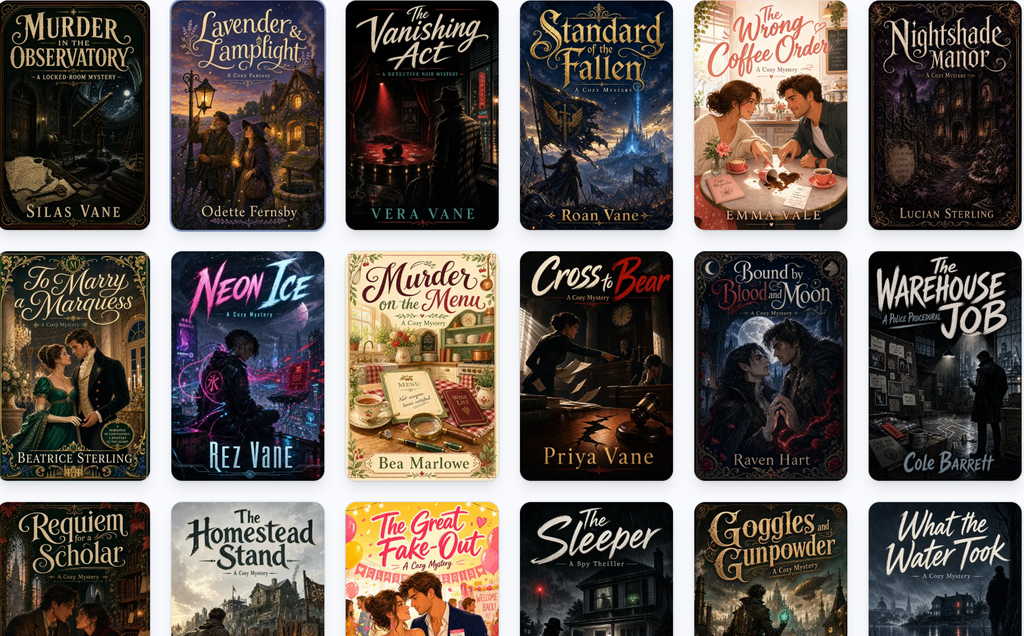
Rolling Stone, among others, has documented how the catalogue filled with AI knockoffs: fluent, empty, sometimes parasitic on real authors’ titles. Academic work on self-published genre fiction between 2023 and 2026 has started to show the other half of that story: the catalogue grew faster than the revenue, books with AI text drove a lot of the volume, and most of them sold very few copies. Per-book revenue fell hardest in the genres where AI text spread furthest. A shelf of books is only an asset if each listing is findable and wanted. Volume without a phrase is inventory nobody ordered. AI Book Machine Review
KDP’s content guidelines, at the help topic the vendor itself links, draw a line many buyers still blur. AI-generated content — text, images, or translations created by an AI-based tool, even if you edit heavily afterward — must be declared when you publish or republish. AI-assisted content — you wrote it, the tool helped you edit, check, or brainstorm — does not currently require that disclosure. A pipeline that drafts chapters from a brain-dump is AI-generated text with a human editor, not the reverse. Answer the question accurately. The product’s cheat sheet exists because getting this wrong can cost an account, which costs every book on the account, which is a much larger number than $27.
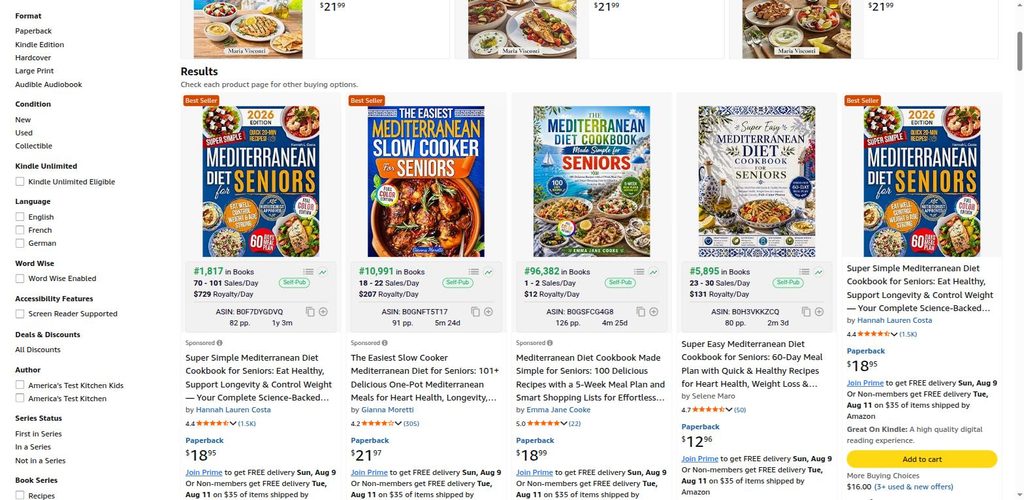
The letter’s best Amazon argument is not the plugin numbers. It is the narrow-phrase argument. Broad one-word subjects belong to traditional publishers and famous names. The narrow phrases — a Mediterranean cookbook for seniors, tuning-fork healing for beginners — are where self-published books still win, and some of the listings on that wall are only months old. Saturation is real about the broad and the obvious. The narrower the need, the less the word “saturated” means. That is good teaching. It is also work you do before you hit start, not after you own six upgrades. AI Book Machine Review
A book on Amazon does skip some of the ugly parts of other online businesses: no warehouse, no stock, no cart of your own, Amazon takes the money and the complaints. It does not skip the parts that decide whether anyone types the title. Research, positioning, cover, look-inside, reviews, and a reason to exist that is not “the engine was available on a Friday.” The vendor is unusually explicit that AI Book Machine is a writing tool and does not promise you will finish, publish, or sell a single copy. Believe that sentence more than the wall of listings. AI Book Machine Review

AI Book Machine vs. Traditional AI Writing Tools
| Feature | AI Book Machine | ChatGPT/Claude | Prompt Packs | Design Tools |
|---|---|---|---|---|
| Approach | Engine with stations and gates | Single chatbot | Wall of text to paste | Make thin content look good |
| Quality Gates | ✅ Three named gates | ❌ None | ❌ None | ❌ None |
| Automatic Rewrites | ✅ Chapters sent back until they clear | ❌ | ❌ | ❌ |
| Blueprint | ✅ Built before drafting | ❌ | ❌ | ❌ |
| Named Method | ✅ Built from your expertise | ❌ | ❌ | ❌ |
| Publish-Ready Output | ✅ | ❌ | ❌ | ❌ |
| No Subscription Needed | ✅ | ✅ | ❌ | ✅ |
| One-Time Price | $27 | $20/month | Varies | Varies |
Where AI Book Machine Wins
- Quality gates that send chapters back — no other tool does this
- Automatic rewrites instead of suggestions
- Blueprint and method built before drafting
- Publish-ready output without reformatting
- One-time price — no subscription
Where It Loses
- Front-end limits — one book, one category
- No fiction on the front end — PRO upgrade required
- Requires your expertise — it doesn’t invent knowledge
- Learning curve — the station workflow takes time to understand
Real-World Performance: What Early Users Are Reporting
The JVZoo affiliate data shows early sales for the product, though the number of sales is still small at the time of writing. The front-end has shown a 1.44% conversion rate, and the Bundle has shown a 1.19% conversion rate with a $3.18 EPC. These are early indicators, not long-term performance data.
Independent Review Findings
RankMarket, an independent group-buy service that vets launch-network software, included AI Book Machine on their list for the August 14, 2026 launch. Their assessment:
“Worth it if you have real operating expertise and have been putting off the book for years — $27 to get a structured draft out of your head is a fair trade.”
“The part that makes it different from a chatbot is the quality gate. Every chapter is checked against three tests before it is allowed through… That loop is the product.”
What Reviewers Highlight
Independent reviewers consistently highlight the same strengths:
- The quality gates are real — they catch real problems and send chapters back.
- The Blueprint and Framework stages produce a coherent structure, not a collection of disconnected essays.
- The output is a finished manuscript, not a draft that needs a week of editing.
- No API keys or subscriptions required — the engine runs on its own credits.
The Honest Assessment
The product works as described. The engine writes complete books. The gates catch real problems. The output is publish-ready. And the process requires your expertise — which is exactly the point.
But this is not a magic button. It requires:
- Your expertise — you must bring something to write about.
- Time — a book takes longer than 27 minutes to produce.
- Review — you read and approve the chapters.
- Patience — the quality gates add time but also add quality.
Who this is for — and who should walk past it
The page names three publishers. The first is building a first shelf with no writing experience: tell it what you want written, or type what you know, and stay the judge of every page. The second is the expert with a business who has been told for years to write the credibility book. The third is the portfolio publisher — more lines, more names, more shelves — which is where PRO, pen-name playbooks, and the Agency licence live.
The second person is the best customer. A consultant, coach, or founder who already has a method, already has stories, already has the numbers the Specificity gate wants, and has a stalled doc at chapter two, is exactly who a gated engine can help. The finishing problem is real. Ghostwriting is thousands. DIY is months. A chatbot is mush. $27 to run a structured pass, with a 30-day refund, is a rational experiment for that person — provided they will read every chapter as if their name is on it, because it will be.
The first person is the risk. “No writing experience needed” is true in the sense that you will not have to generate the sentences. It is false in the sense that you still have to know whether a sentence is true, useful, and yours. If you cannot tell, the gates can still ship a consistent book. Consistent and hollow is how slop gets onto the shelf with a straight face. AI Book Machine Review
The third person should be the most suspicious of the ladder. A portfolio of AI books is a strategy Amazon has spent years making harder, not easier. Pen names and category unlocks are not a moat. They are a multiplier for whatever quality you already insist on. If you do not insist, you will simply fail in more aisles. AI Book Machine Review
Walk past it if you need a collaborator that sounds like a particular living writer, if you are writing a book whose value is the prose itself, if you want a researched academic monograph, or if you think a listing is a pension. Walk past the Agency licence if you do not already sell a service. Walk past PRO if you have one book in one category and you like that book. Keep the $27 if — and only if — you will sit in the pauses. AI Book Machine Review
Pros and Cons
Pros ✅
| Aspect | Detail |
|---|---|
| Writes the Whole Book | Not an outline, not a chapter — the finished manuscript |
| Three Quality Gates | Every chapter checked for specificity, actionability, and accuracy |
| Automatic Rewrites | Chapters sent back until they clear, not just suggested |
| Blueprint Before Drafting | A coherent plan, not disconnected essays |
| Named Method | Your framework, named and numbered |
| Publish-Ready Output | KDP-ready files with the Publish-Ready Pack |
| No Subscription Needed | The engine runs on its own credits |
| One-Time Price | $27 entry vs. thousands for a ghostwriter |
| 30-Day Guarantee | No-questions money-back |
| Proven Creator | Andrew Darius — 57K+ customers, 30+ bestselling products |
Cons ❌
| Aspect | Detail |
|---|---|
| Non-Fiction Only on FE | Fiction requires the PRO upgrade |
| Requires Your Expertise | It doesn’t invent knowledge |
| Learning Curve | The station workflow takes time |
| Front-End Limits | One book, one category |
| Not a Publisher | You still handle KDP upload |
| Long Upsell Sequence | Multiple upgrades at checkout |
| New Product | Limited long-term independent reviews |
Is AI Book Machine a Scam?
No. AI Book Machine is a legitimate product from an experienced creator with a verifiable track record. Andrew Darius has launched 30+ products, served 57,000+ customers, and maintained his software over years. The product is backed by a 30-day, no-questions money-back guarantee, and independent reviewers confirm the engine works as described. AI Book Machine Review
The Case for Legitimacy
1. Verified Creator
Andrew Darius is a JVZoo High-Performance Leader and Top Vendor with a track record that includes Explaindio, a product that has been sold and supported for years rather than abandoned after launch week.
2. Real Technology
The engine is live and functional. Independent reviewers have tested it. The quality gates are real, not marketing gimmicks. The sales page documents specific catches from recorded runs.
3. Transparent Documentation
The sales page and JV documentation are detailed and transparent about what the product does and doesn’t do.
4. 30-Day Guarantee
The product is backed by a 30-day, no-questions money-back guarantee.
5. Independent Reviews
Independent reviewers like RankMarket have vetted the product and described it as “worth it” for the right user.
6. No Income Claims
The sales page explicitly avoids income claims. It sells a capability — a finished, professional book — not a promise of riches. That honesty is a mark of legitimacy.
The Case for Caution
1. New Product
AI Book Machine launched in August 2026. Long-term reliability data is still developing.
2. Requires Your Expertise
If you have no real operating experience, the quality gates will keep sending chapters back. This is by design, but it’s a limit.
3. Front-End Limits
The $27 tier is for business non-fiction. Fiction genres and the full category range require the PRO upgrade.
4. Not a Publisher
It produces the manuscript and publish-ready files. It does not upload to Amazon for you. You still handle the KDP process.
Our Assessment
AI Book Machine is a legitimate product built on real technology. The quality gates work. The engine writes complete books. The output is publish-ready. And the process is honest about what it requires: your expertise.
It is not a magic money machine. It’s a tool for finishing a book. If you’re willing to bring your expertise, steer the process, and review the output, it can be a valuable asset. If you’re looking for a passive income machine without effort, this isn’t it. AI Book Machine Review
Final Verdict- AI Book Machine Review 2026: The AI That Writes The Whole Book (Not Just a Draft)
AI Book Machine is one of the most honestly marketed AI writing products to launch this year, and the honesty is a feature rather than a limitation. Most tools in this category promise a book and hand you a folder of paragraphs. This one promises to finish your book, then shows the machinery — named gates, a locked teaching order, a documented data-loss catch, and a chapter the engine refused to publish because it could not verify a statistic. That last behavior, on its own, is the strongest credibility signal on the page: a machine built to look good would never do it, because holding back a chapter is the one outcome that costs the vendor something. AI Book Machine Review
The Bottom Line
AI Book Machine addresses a real problem: the book you keep not writing. It solves that problem with an engine that takes your expertise, builds a blueprint, names and numbers your method, writes the chapters, and runs every chapter through three quality gates before you see it.
| Criteria | Score | Reasoning |
|---|---|---|
| Innovation | ⭐⭐⭐⭐ | Three quality gates + automatic rewrites is genuinely novel |
| Value for Money | ⭐⭐⭐⭐⭐ | $27 once vs. thousands for a ghostwriter |
| Ease of Use | ⭐⭐⭐⭐ | Beginner-friendly, but requires expertise and review |
| Creator Reputation | ⭐⭐⭐⭐⭐ | Andrew Darius — 57K+ customers, 30+ bestselling products |
| Risk Level | ⭐⭐⭐⭐⭐ | 30-day guarantee, real technology, verified creator |
| Potential Value | ⭐⭐⭐⭐⭐ | A finished book is an authority asset, a lead magnet, and a product |
Overall Rating: ⭐⭐⭐⭐ (4.5/5)
Get AI Book Machine + the Launch Bonuses
Get AI Book Machine Bundle + the Launch Bonuses
Our Recommendation
If you’re a consultant, coach, or business owner who has real expertise and has been putting off writing that book for years, AI Book Machine is worth serious consideration. The $27 front-end is a low-risk entry point, and the 30-day guarantee means you can test it without downside.
If you’re an agency or service provider, the Agency licence ($297) turns this into a service you can offer to clients.
If you want a lead magnet that actually pulls, the Reader Engine Toolkit ($67) turns your book into a list-building asset.
If you’re expecting a magic button or guaranteed income, look elsewhere. This is a tool for finishing a book. It requires your expertise, your review, and your effort.
The key insight: AI Book Machine doesn’t just help you write a book. It writes the book — and then argues with its own draft until it’s good. That’s a fundamentally different value proposition from every AI writing tool on the market.
Best For:
- Consultants, Coaches, and Agency Owners
- Service Providers
- Business Owners
- Affiliate Marketers
- Agencies
Final Rating: ⭐⭐⭐⭐ (4.5/5)
Frequently Asked Questions
Q: What is AI Book Machine?
A: AI Book Machine is a cloud-based AI writing engine that takes your existing expertise and turns it into a complete, professionally structured business book — not an outline, not a chapter, but the finished manuscript.
Q: Who created AI Book Machine?
A: Andrew Darius, founder of Marketro LLC, with 57,000+ customers served, 207,000+ digital products sold, and 30+ bestselling products.
Q:Will this make me money on Amazon KDP?
No one honest can promise that, including the vendor. Their own page says the tool drafts and prepares a book; it does not promise you will finish, publish, or sell a copy. Amazon is full of ordinary how-to titles and also full of AI slop. Publishing is a listing. Selling is a different skill.
Q: How much does AI Book Machine cost?
A: The front end is $27 one-time. Upsells range from $47 to $297. The full stack is $602. The Bundle is $297.
Q: When does AI Book Machine launch?
A: August 14, 2026 at 11:00 AM ET. Cart closes August 19, 2026 at 11:59 PM ET.
Q: Is AI Book Machine a scam?
A: No. It’s a legitimate product from an experienced creator with a 30-day, no-questions money-back guarantee. Independent reviewers confirm it works as described.
Q: Do I need technical skills?
A: No. The platform is designed to be beginner-friendly. If you can describe what you know, you can use it.
Q: Do I need a ChatGPT or Claude subscription?
A: No. The engine runs on its own AI and credits. No external subscription required.
Q: Can I write fiction with AI Book Machine?
A: The front-end is built for business non-fiction. Fiction genres are unlocked in the PRO upgrade.
Q: Is there a money-back guarantee?
A: Yes, a 30-day, no-questions money-back guarantee.
Q: What’s the difference between the Core and Bundle?
A: The Core ($27) gives you the engine for one book, one category. The Bundle ($297) includes every upgrade: all genres, the Publish-Ready Pack, the Reader Engine Toolkit, the audiobook, and the Agency licence.
Q: Does AI Book Machine publish to Amazon for me?
A: No. It produces the manuscript and publish-ready KDP files. You handle the KDP upload yourself.
Q: What is the “Brain-to-Book” process?
A: It’s the engine’s intake process. You brain-dump what you know — your process, your numbers, your war stories — and the engine builds a Blueprint, names and numbers your method, and writes the book chapter by chapter.
Disclaimer
This review contains affiliate links. We may receive a commission if you purchase through these links. All opinions are our own and based on information from the official sales page, JV documentation, and independent reviews as of August 2026. AI Book Machine does not guarantee income, results, or earnings. Always do your own research before making any purchase decision. The information provided in this review is for educational purposes only and does not constitute financial or business advice.